

How Google's Local Search Algorithm Works
Google's local search algorithm is fundamentally different from its organic search algorithm. While organic rankings focus on content quality and backlinks, local rankings evaluate a distinct set of signals tied to physical location and business reputation.
The local search algorithm in optimization terms solves a matching problem: given a user's query, location, and intent, which businesses are the best match? Google evaluates this through three primary factors.
Relevance
Relevance measures how well your business listing matches what someone is searching for. Google analyzes:
- Your business category and subcategories
- Keywords in your business description
- Services and products listed on your profile
- Content in your Google Business Profile posts
- Reviews that mention specific services or products
The more clearly your profile communicates what you offer, the more relevant Google considers your business for matching queries.
Distance
Distance is exactly what it sounds like — how far your business is from the searcher or the location mentioned in their query. This is the factor you have the least control over, but it is not absolute. A highly relevant and prominent business can outrank a closer but less optimized competitor.
Prominence
Prominence reflects how well-known and trusted your business is. Google measures this through:
- Number and quality of Google reviews
- Review response rate and recency
- Citations across directories and websites
- Backlinks from authoritative sources
- Website authority and content quality
- Engagement metrics on your Google Business Profile
Prominence is where most optimization effort should focus, because it is the factor most responsive to active local search optimization work.
The Local Search Algorithm and Optimization Problem
Understanding the local search algorithm as an optimization problem helps frame your strategy. You are essentially trying to maximize your score across relevance, distance, and prominence while competing against other businesses solving the same problem.
The challenge is that Google does not publish exact weights for each factor. Based on industry research and testing, prominence and relevance carry more weight than distance for most non-hyper-local queries. This means a well-optimized business 3 miles away can outrank an unoptimized business 1 mile away.
What the Algorithm Rewards
- Consistent NAP data (Name, Address, Phone) across all platforms
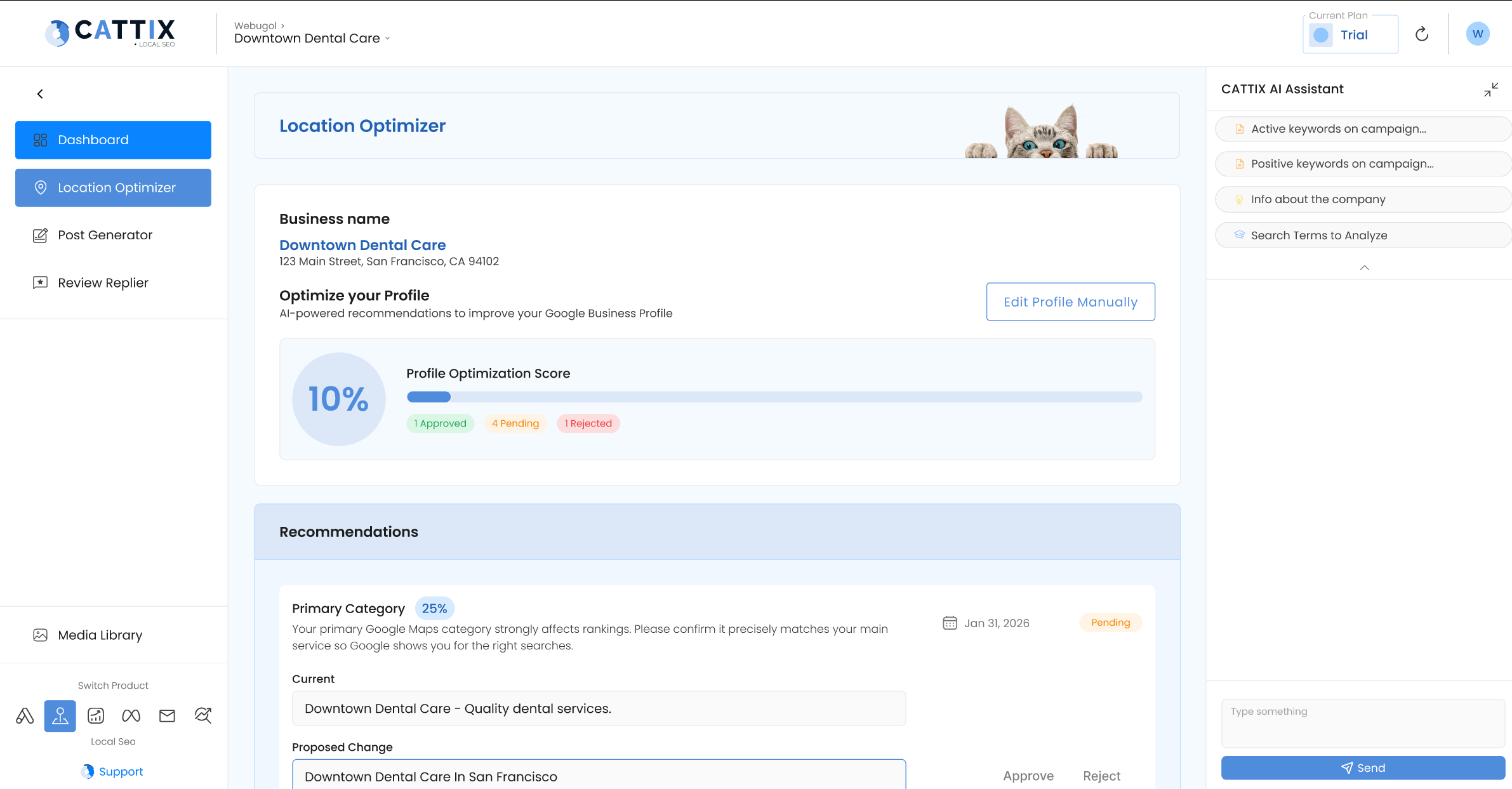
- Complete Google Business Profile with all sections filled
- Regular posting activity (signals an active, engaged business)
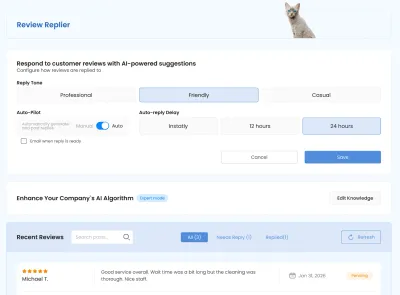
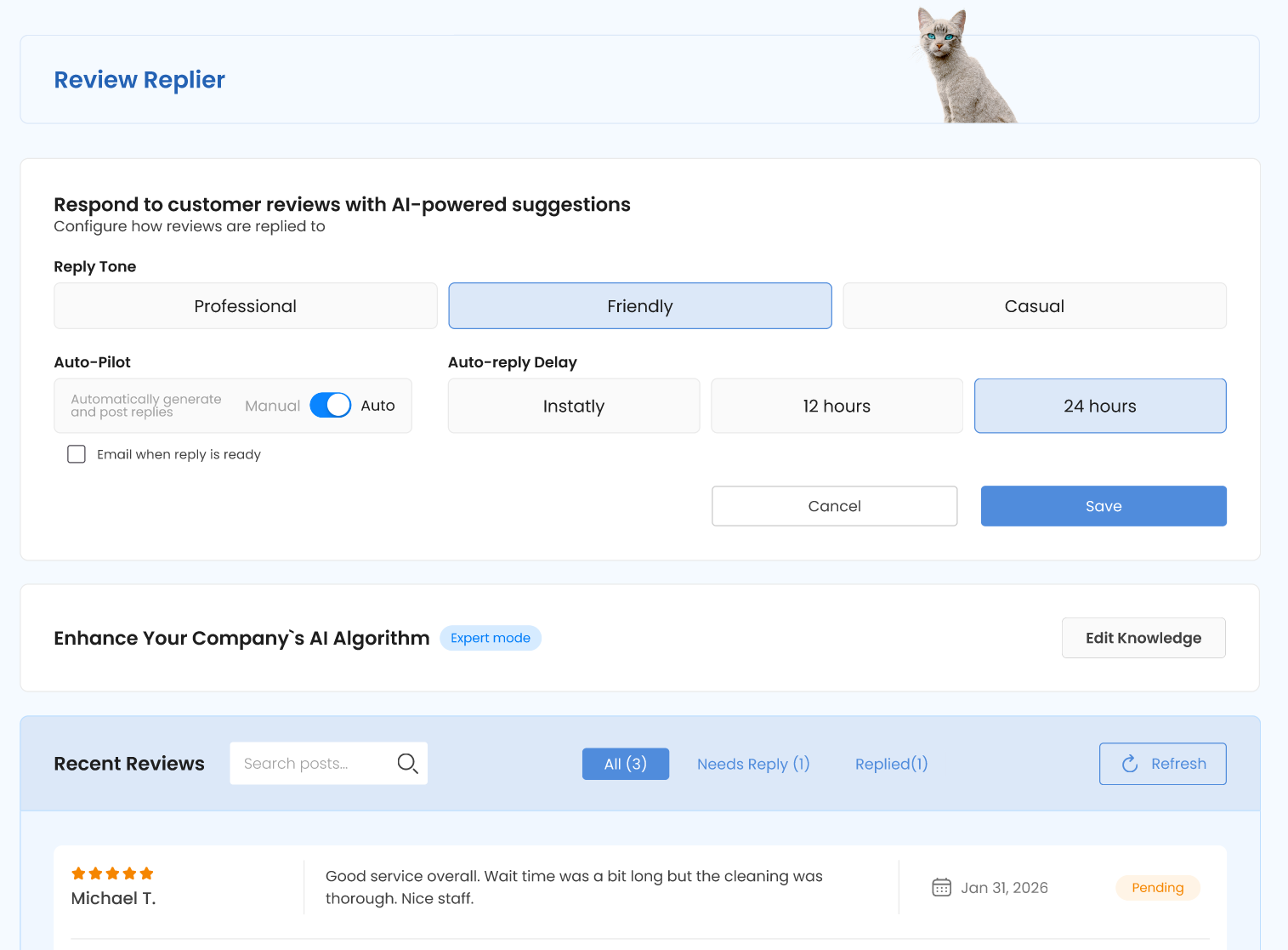
- Fast review responses (shows customer engagement)
- Relevant content that matches local search queries
- Mobile-friendly website with local signals
What the Algorithm Penalizes
- Inconsistent business information across directories
- Keyword stuffing in business names or descriptions
- Fake or purchased reviews
- Inactive profiles with no posts or updates
- Duplicate listings for the same location
How to Optimize for the Local Search Algorithm
Here is a practical framework for improving your position in local search results, organized by the three ranking factors.
Maximize Relevance
Optimize your Google Business Profile:- Choose the most accurate primary category
- Add all relevant secondary categories
- Write a keyword-rich business description (750 characters max)
- List all services and products with descriptions
- Add attributes that describe your business
- Post 1-2 times per week with relevant keywords
- Include calls-to-action and images
- Cover different services and topics in rotation
- Use AI tools to maintain consistent posting schedules
For a deeper look at profile optimization, read our guide on ai google business profile optimization.
Strengthen Prominence
Build review momentum:- Ask satisfied customers for reviews consistently
- Respond to every review within 24-48 hours
- Address negative reviews professionally and constructively
- Never purchase fake reviews — the algorithm detects patterns
- Ensure your business information matches across all directories
- Claim and update listings on major platforms (Yelp, Apple Maps, Bing Places)
- Remove duplicate listings that could confuse the algorithm
- Publish blog posts targeting local keywords
- Create service area pages for each location you serve
- Build content around local events and community topics
Work Within Distance Constraints
While you cannot change your physical location, you can:
- Create content targeting specific neighborhoods and service areas
- Use location-specific keywords in your GBP posts
- Build landing pages for each area you serve
- Ensure your service area is accurately defined in your GBP settings
Tools That Help with Local Search Algorithm Optimization
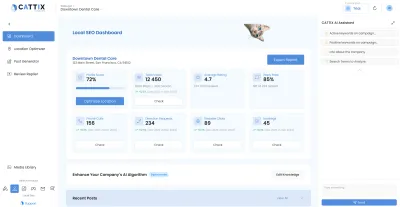
Manual optimization works, but it is time-consuming. AI-powered automated local seo tools handle the repetitive tasks so you can focus on strategy.
| Task | Manual Time | With AI Tools |
|---|---|---|
| GBP post creation | 30-60 min/post | 5 min review |
| Review responses | 10-15 min/review | 2 min review |
| Profile optimization audit | 2-3 hours | Instant report |
| Performance tracking | 1-2 hours/week | Real-time dashboard |
These tools work together to systematically improve your relevance and prominence scores — the two factors you can actively influence in the local search algorithm in optimization of your business visibility.
Frequently Asked Questions
What is the local search optimization algorithm?
The local search optimization algorithm is Google's system for ranking businesses in local search results and Google Maps. It evaluates three main factors — relevance, distance, and prominence — to determine which businesses appear for location-based queries.
What are the three main ranking factors in local search?
Google's local algorithm uses relevance (how well your business matches the query), distance (how far you are from the searcher), and prominence (how well-known and trusted your business is). Prominence and relevance are the most controllable through active optimization.
How does the local search algorithm differ from organic search?
Organic search focuses primarily on content quality, backlinks, and technical SEO. The local algorithm adds location-based signals — physical proximity, Google Business Profile data, reviews, and citations — as major ranking factors alongside content quality.
How often does Google update its local search algorithm?
Google makes continuous updates to its local algorithm, with major updates happening several times per year. Core updates can shift rankings significantly. Maintaining consistent optimization practices protects against algorithmic volatility.
Can I optimize for the local search algorithm without paid tools?
Yes, but it takes significantly more time. Manual optimization involves updating your GBP regularly, responding to reviews, managing citations, and creating content — all tasks that AI tools like CATTIX automate. Free tools like Google Business Profile Manager cover basics, but they lack automation and analytics.
How long does local search algorithm optimization take to show results?
Most businesses see ranking improvements within 4-8 weeks of consistent optimization. Review velocity, posting frequency, and competitive landscape all affect the timeline. Learn more about ai for local seo approaches to accelerate your results.
What is the biggest mistake in local search optimization?
Inconsistent business information across platforms. When your name, address, or phone number varies across directories, the algorithm loses confidence in your listing. Citation consistency is a foundational requirement before other optimization efforts can have full impact.
Does the local search algorithm favor businesses with more reviews?
Review quantity matters, but quality and recency matter more. A business with 50 recent, genuine reviews with responses will typically outrank one with 200 old reviews and no responses. The algorithm values ongoing engagement over total count.
Conclusion
The local search algorithm rewards businesses that maintain relevant, complete profiles with strong prominence signals. Understanding how relevance, distance, and prominence interact gives you a framework for prioritizing your optimization efforts.
CATTIX helps you systematically improve the factors that matter most to the local search algorithm. Automate your GBP posting, review management, and profile optimization with AI — start your 15-day free trial and see where your local rankings improve.