

Local SEO for Dentists: How to Attract More Patients Online
A patient in your city decides they need a dentist. They pick up their phone, type a few words into Google, and book with whoever appears first on the map. That decision takes under thirty seconds. Whether your practice is in that map result or not is determined entirely by your local SEO - and for most dental clinics, the gap between first place and fifth place comes down to a handful of technical and operational factors that are entirely within your control.
This guide breaks down exactly what local SEO for dentists requires in 2026 and into 2027: from building a Google Business Profile that outperforms your nearest competitors, to generating the review velocity Google's algorithm responds to, to showing up in AI assistant recommendations that are increasingly replacing traditional search for a growing segment of patients. Each section covers not just what to do, but why it moves the needle.
Why Local SEO for Dentists Is Non-Negotiable in 2026
Dental care is one of the most geographically constrained service categories that exists. Nobody drives two hours for a cleaning. When someone needs a dentist, they need one nearby - and they find that dentist through Google Maps, local search results, or increasingly through AI assistants that synthesize recommendations from across the web.
The practices that own the top positions in local search results do not get there by accident. They have built a combination of profile completeness, review momentum, citation consistency, and content relevance that Google's local algorithm rewards. These are not one-off optimizations - they compound over time, which means the practice that starts building them today will be significantly harder to displace by 2027 than one that waits another year.
The local search ranking factors behind Google's local algorithm - relevance, proximity, and prominence - each have specific levers a dental practice can pull. Proximity is the one factor you cannot change. Relevance and prominence are where the real work happens, and both are fully within your control.
Step 1: Optimize Your Google Business Profile
Most patients never visit your website before deciding to call. They read your Google Business Profile - your hours, your photos, your reviews, your services - and make the decision from there. That makes your GBP the highest-leverage page your practice has, and most dental practices have left significant gaps in it. AI for Google Business Profile optimization has made systematic profile improvement more accessible, but the foundation is still filling in every section Google offers and keeping it current.
Choose the Right Categories
Most dental practices set their primary category to "Dentist" and stop there. This limits which searches your listing can appear for. Google allows additional secondary categories, and each one expands your reach. If you offer cosmetic dentistry, implants, orthodontics, or emergency dental care, add those as secondary categories. A practice offering dental implants that only lists "Dentist" may never appear when someone searches "dental implants in [city]."
Complete Every Profile Section
Google treats your GBP like a form - every filled field adds a signal it can match to relevant searches. Make sure you include:
- A business description written around your most important service keywords and city
- A complete services list with individual service names and descriptions
- Accurate operating hours including holidays and special hours
- Photos of your office interior, exterior, team, and equipment - updated regularly
- Accepted insurance providers listed under attributes
- A booking link connected directly to your scheduling system
- Accessibility attributes so your practice appears in relevant filtered searches
Profiles that leave sections empty rank lower than those that treat every field as a ranking opportunity.
Post Regularly to Stay Active
Google favors active, maintained listings. Posting brief updates - a new service, a seasonal reminder, a patient education tip - signals that the business is operating and engaged. Aim for at least two posts per week to keep your profile from going stale.

Step 2: Build a Strong Review Strategy
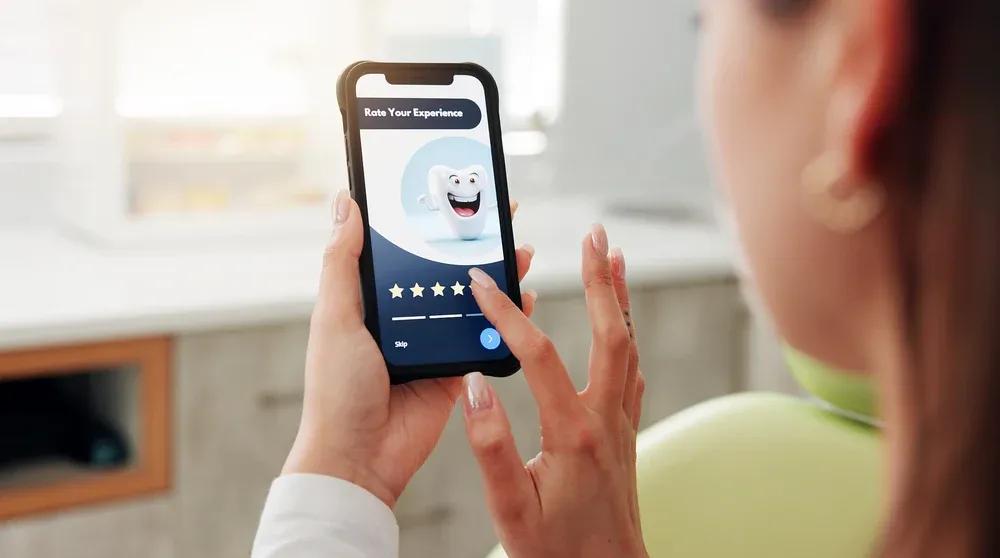
Online reviews are one of the strongest local ranking factors Google uses, and they are equally powerful as a conversion signal. A practice with 200 reviews averaging 4.7 stars will almost always outrank one with 15 reviews averaging 5.0 stars - both in Google Maps and in AI tool recommendations.
Ask at the Right Moment
The best time to ask for a review is immediately after a positive experience - at checkout or via a follow-up text within two hours of the appointment. A direct review link removes friction and dramatically increases completion rates. Patients who receive a one-tap link are far more likely to follow through than those asked to "find us on Google."
Respond to Every Review
Responding to reviews - both positive and negative - signals to Google that the practice is active and engaged. For negative reviews, respond professionally and offer to resolve the issue privately. For positive ones, a short genuine reply reinforces patient relationships. Naturally referencing your services and location in responses also adds a small keyword signal over time.
Freshness Matters More Than Volume Alone
A practice generating two to three new reviews per week will generally outrank one that earns only a handful per year, even if the slower practice has a higher average rating. Recency signals to Google that the business is currently operating and attracting real patients. Older review profiles, no matter how strong, gradually lose relative weight as competitors generate fresh feedback.
Step 3: Build Local Citations and NAP Consistency
A local citation is any online mention of your practice's name, address, and phone number (NAP). Google cross-references these details across hundreds of sources to confirm your business is real and located where you claim. Inconsistencies - a different address format, an old phone number, a slightly different business name - reduce Google's confidence and lower your rankings.
Priority citation platforms for dental practices:
- Healthgrades
- Zocdoc
- Vitals and RateMDs
- Yelp and Bing Places
- Apple Maps
- The American Dental Association directory
- Local Chamber of Commerce listings
- WebMD and Sharecare
Every listing must show exactly the same business name, address, and phone number as your GBP. Even small formatting differences - "St." versus "Street," a suite number in one place but not another - count as inconsistencies that chip away at ranking confidence.
Step 4: Add Schema Markup to Your Dental Website
Schema markup is structured data embedded in your website code that tells search engines exactly what your practice is, where it operates, and what it offers. For dental practices, the relevant schema types include LocalBusiness, Dentist, MedicalClinic, and FAQPage.
Well-implemented schema helps your practice appear in rich results - those enhanced Google listings that show star ratings, service types, and business hours directly in search results. Rich results earn higher click-through rates, which compounds the traffic benefit of ranking well. Schema also improves how AI tools interpret your practice information when generating local recommendations.
Step 5: Create Location-Specific Content
A website page targeting "dentist in [city name]" gives Google additional geographic relevance signals that your GBP alone cannot provide. Well-written location pages covering your services, team, and patient FAQs relevant to your area help Google understand the geographic scope of your practice.
A blog covering common dental questions your patients actually search - "how long do dental implants last," "is teeth whitening safe," "what to expect at a first appointment" - builds topical authority and generates additional search traffic that supports your local rankings. You can use local SEO tools to identify which questions your local patients are searching for most. Content that directly answers real patient questions also has a strong chance of appearing in Google's AI Overviews, which regularly surface in health-related searches.
Step 6: Appear in AI Search Results
In 2026, patients increasingly consult AI tools before booking any appointment. A patient asking Gemini or ChatGPT "who is the best dentist in [city]" receives a recommendation pulled from structured data, review platforms, and business listings - not just traditional Google Maps results.
To appear consistently in AI-generated recommendations:
- Keep your Google Business Profile complete, accurate, and actively updated
- Earn consistent, recent reviews across Google, Yelp, and Healthgrades
- Maintain NAP consistency across all directories and platforms
- Use schema markup (LocalBusiness, Dentist) on your website
- Publish blog posts and FAQ content that directly answers common dental questions
AI tools favor businesses with established trust signals across many sources. Combining local SEO with AI automation is the most practical way to maintain these signals consistently without adding hours of manual work each week.
How CATTIX Helps Dental Practices Win Local SEO
Managing local SEO across all these touchpoints manually takes significant time. For a busy dental practice, that time is rarely available. CATTIX is an AI-powered local SEO platform that automates the routine work behind consistent local search visibility.
Location Optimizer scores your Google Business Profile and surfaces specific, prioritized recommendations: which categories to add, which services are missing, where your description falls short relative to local competitors. Each recommendation includes a potential impact score and a plain-language explanation, so you understand exactly why a change is suggested before approving it.
Post Generator keeps your GBP active with a set posting cadence - two posts per week, scheduled for the times your audience is most active. Posts are generated from your business context, so they reflect your actual services and tone rather than generic dental marketing copy.
Review Replier drafts responses to incoming Google reviews in your preferred tone - professional, friendly, or casual - and either notifies you when a reply is ready or publishes automatically after a configurable delay. This keeps your reply rate high without requiring a staff member to monitor reviews manually every day.
Explore local SEO management software built for this kind of ongoing, multi-channel local SEO work. For practices managing multiple locations, CATTIX handles each location independently, making it practical to maintain consistent optimization across an entire group without multiplying the manual workload.

What to Expect from Dental Local SEO in 2027
The direction local SEO is heading makes it clear that the practices investing now will have a significant advantage going into 2027. Several shifts are already underway that will reshape how dental practices compete for local patients.
AI-generated search results are becoming the default entry point for many patient searches. By 2027, a growing share of appointment decisions will be made directly from AI summaries rather than from clicking through to any website. Practices that have built strong structured data, consistent citation profiles, and high-volume review histories will be the ones these AI tools recommend - the ones that haven't will find themselves increasingly invisible regardless of how well their website ranks.
Voice search through smart devices is also expected to grow as a channel for local dental queries. Voice results are almost exclusively pulled from Google Business Profiles and structured data, meaning the same GBP optimization work you do today continues to pay off in 2027 as that channel matures.
Google Maps itself is evolving. Profiles with higher engagement - more reviews, more Q&A activity, more posts, higher booking rates - are already being rewarded with better placement. By 2027, passive profiles with minimal activity will struggle to compete against practices that treat their GBP as an active marketing channel rather than a static listing.
The practices that start building these foundations in 2026 will not need to scramble to catch up in 2027. Consistent review generation, active profile management, and structured data are compounding advantages - each month of effort makes the position harder for competitors to overtake.
Start Attracting More Patients with Local SEO Services for Dentists
Local SEO for dentists is not optional in 2026 - it is the primary channel through which new patients discover your practice. A complete Google Business Profile, a steady stream of fresh reviews, consistent citations, and relevant website content together determine whether your practice appears at the top of local search or gets buried under competitors.
The good news is that most dental practices in any given market have not optimized these areas thoroughly. Getting even half of these strategies right puts you ahead of the majority of local competitors.
CATTIX automates the ongoing maintenance - profile optimization, regular posting, review responses - so your practice stays visible without demanding daily attention. Try CATTIX and see how AI-powered local SEO automation keeps your Google Business Profile optimized and your practice in front of patients searching in your area.
About the Author
Eugene Ugolkov, CEO and Founder at CATTIX
Eugene is the founder of CATTIX, an AI-powered Google Ads management platform. With extensive experience in digital marketing and machine learning, he leads the development of intelligent advertising solutions that help businesses maximize their ROI.
Publications: Google Scholar