
Local SEO for Franchises: How to Rank Every Location
Your franchise brand is recognized nationally. Your customer service is consistent. Your locations follow the same operational playbook. But in Google Maps, your newest location is invisible while a local competitor with a fraction of your brand authority dominates the map pack. This is the central paradox of local seo for franchises: a nationally trusted name does not automatically translate into location-level search visibility. Google does not rank your brand - it ranks each individual location on its own merits.
This guide covers what makes franchise local SEO structurally different from standard SEO, the eight core strategies that determine whether each location ranks, and how to manage this at scale without a dedicated SEO team for every location.
What Is Local SEO for Franchises?
Local SEO for franchises means optimizing each individual location's online presence so it ranks well in searches like "near me" or city-specific queries, rather than relying on one generic brand-wide strategy. This involves managing separate Google Business Profiles for every franchise location, ensuring consistent name, address, and phone number (NAP) data across directories, building location-specific landing pages, gathering local reviews, and earning citations from regional sources. Unlike single-business SEO, franchise local SEO must balance brand consistency with location-level customization, helping each branch compete in its own market while supporting the parent brand's overall visibility and reputation nationwide.
Why Local SEO for Franchises Is Different
Standard SEO focuses on building domain authority and ranking for competitive keywords across an entire website. Local seo for franchise businesses operates at a different level - it's about making each specific location appear in the Google local 3-pack and Google Maps when nearby customers search for what that location offers.
The key difference is geography. Google's local algorithm weighs distance, relevance, and prominence independently for each location. A franchise with 50 locations is essentially running 50 separate local SEO campaigns. A high-authority corporate domain helps with trust, but it cannot substitute for location-specific signals: a fully optimized Google Business Profile, consistent local citations, and an active review profile at each individual address.
Franchises also face a challenge that independent businesses do not: internal competition. When two franchise locations serving neighboring areas both target the same search queries, they can suppress each other in local results. Managing this requires deliberate geographic segmentation in your franchise local seo strategy - differentiating each location's content by the specific neighborhoods, landmarks, and communities it actually serves.
8 Core Strategies for Local SEO for Franchises
The following strategies form the operational foundation of any effective local seo strategy for franchises. Each one needs to be applied at the location level - not just at the corporate domain level:
- Create a dedicated Google Business Profile for each location. Every franchise location needs its own GBP listing with a location-specific address, phone number, hours, and photos. A single brand-level listing does not rank for searches happening near individual locations. Businesses with complete GBP listings are 70% more likely to attract location visits from local searches.
- Build unique location pages on the corporate domain. Each location should have its own page - using a subfolder structure like domain.com/locations/city-name/ - with content written specifically for that market. Duplicating a template and swapping only the address triggers duplicate content suppression that can sink every location page simultaneously.
- Maintain NAP consistency across all listings. Name, address, and phone number must be identical across the GBP, your website, and every directory that lists each location. Inconsistencies fragment the citation authority that feeds local prominence. Read more about NAP consistency for local SEO and how to audit it systematically.
- Generate and manage reviews per location. Reviews are a top-three local ranking factor. Each location needs its own review generation system - not a brand-level campaign. Businesses with more than 50 Google reviews earn 45% more clicks from local search than those with fewer than 10. Every review should receive a response within 48 hours.
- Build local citations for each location. List each franchise location in major directories: Google, Yelp, Bing Places, Apple Maps, Facebook, and relevant industry directories. Each citation reinforces the location's legitimacy in Google's local entity graph. Consistency is the requirement - every citation must match the canonical NAP exactly.
- Add LocalBusiness schema markup to each location page. Structured data tells Google's crawlers exactly what each location is, where it is, and what it offers. Implement LocalBusiness JSON-LD schema on every franchise location page with name, address, phone, coordinates, hours, and service type. Only 31% of local business websites properly implement this markup — getting it right is a real competitive advantage.
- Post regularly on each Google Business Profile. GBP posts signal active business operations to Google's local ranking system. Posting about promotions, events, and updates - at least weekly per location - keeps each profile active and helps each location appear in discovery searches, not just branded queries.
- Track performance separately for each location. Aggregated brand-level analytics hide location-level problems. Set up location-specific tracking for GBP impressions, calls, direction requests, and website clicks so you can identify which locations are underperforming and act on it.
The Internal Competition Problem Franchises Must Avoid
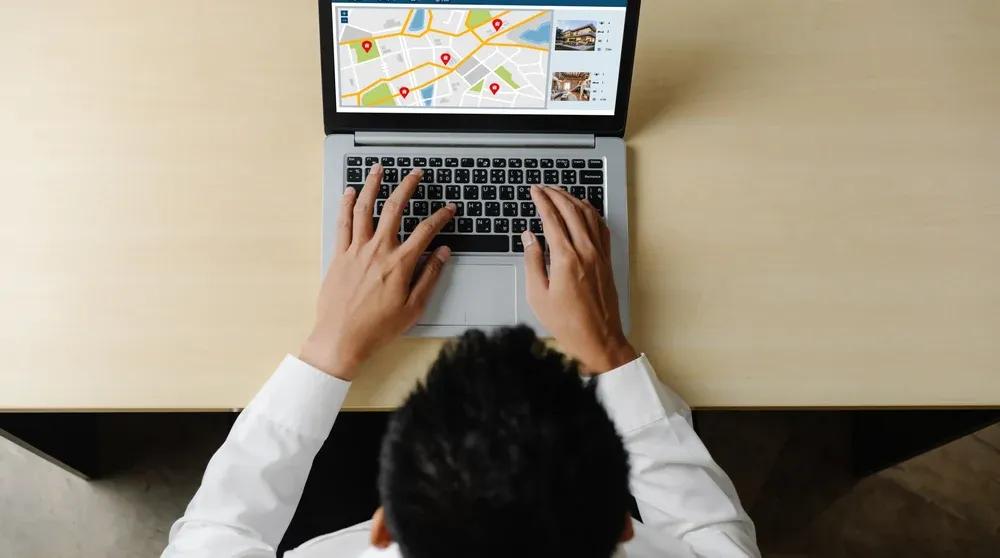
One of the most damaging patterns in multi-location local SEO is when franchise locations compete against each other in the same search results. This happens when two nearby locations target identical keywords with nearly identical location pages - Google may surface only one, suppressing the other even when both are geographically relevant to the searcher.
The fix is geographic differentiation. Each location page should reference the specific neighborhoods, landmarks, and communities it serves rather than generic city-level targeting. A franchise in a large metro benefits from hyper-local content that speaks to the specific area each location anchors: neighborhood names, local references, service variations relevant to that market. This differentiation prevents internal competition and helps each location rank for the searches most relevant to its specific address. The same principle applies to GBP posts and Q&A - location-specific signals reinforce that each listing is a distinct business serving a distinct community.
Scaling Local SEO Across All Franchise Locations
The operational challenge of local seo for franchises scales directly with the number of locations. Managing GBP profiles, monitoring reviews, posting updates, and auditing citations for 10 locations is manageable manually. For 30, 50, or 100+ locations, manual management becomes the bottleneck that prevents consistent execution of the strategies that actually drive rankings.
This is where automated local SEO tools become essential - not as a shortcut, but as the only viable path to consistency at scale. Without automation, franchises either under-execute on individual location signals or dedicate disproportionate resources to operational tasks that should be systematized.
How CATTIX Helps Franchise Brands Rank Every Location
CATTIX Local SEO is built for multi-location management - handling Google Business Profile performance, review responses, and local posting across many locations without requiring a separate workflow for each one. Here is how the platform addresses the core local seo for franchises workflows:
Dashboard overview per location. CATTIX shows how each GBP is performing - total views, calls, direction requests, and website clicks - from a single centralized interface. Instead of logging into each profile separately, franchise managers can see which locations are lagging and prioritize the ones that need attention.
Profile Optimizer. The Profile Optimizer audits each GBP listing and flags what is incomplete or below competitor standards: missing service descriptions, insufficient photos, incomplete hours, or profile elements that competitor listings are outperforming on. It enables systematic improvements across all locations rather than reactive, location-by-location fixes.
Post Generator. CATTIX generates GBP post content for each location using AI, guided by your keyword and topic list. Posts can be scheduled in advance and reviewed before publishing, or set to autopilot for locations where automated consistency is the priority. Maintaining weekly posting frequency across 20+ locations manually is a significant operational burden - automating it removes that constraint entirely.
Review Replier. CATTIX drafts responses to new reviews automatically and allows brand managers to approve or edit before sending. Responding to every review within 48 hours - a practice that affects both ranking signals and customer perception - becomes operationally feasible for multi-location franchises rather than a task that gets deprioritized under workload pressure.
For a broader look at how local SEO management platforms compare, see our guide to local SEO management software.

What to Prioritize First in Your Franchise Local SEO Strategy
For franchises building a local seo strategy for franchises from the ground up, sequence matters. Start where Google's algorithm places the most weight and where gaps create the most direct ranking drag:
- Audit all GBP listings first. Identify which locations have incomplete profiles, missing verification, or NAP inconsistencies with the corporate website. These are the most direct levers for local pack rankings and the fastest to correct.
- Fix NAP consistency at the aggregator level. The four major data aggregators feed hundreds of downstream directories. Correcting inconsistencies at the source has a multiplicative effect compared to fixing individual listings one at a time.
- Build review generation into operational workflows. Review velocity and volume compound over time. A systematic review request process integrated into post-service customer touchpoints is more durable than any one-time campaign.
- Create differentiated location page content. Prioritize locations in the most competitive markets, where unique content has the largest ranking impact relative to the investment. Duplicate or near-duplicate location pages are actively harmful in competitive markets.
Effective local seo services for franchises combine the right technical foundation with consistent execution across every location. The franchises dominating local search in 2026 are not doing anything exotic - they are doing the fundamentals consistently, at scale.
Start at CATTIX to connect your Google Business Profile and manage local SEO across all your franchise locations from one platform.
About the Author
Eugene Ugolkov, CEO and Founder at CATTIX
Eugene is the founder of CATTIX, an AI-powered Google Ads management platform. With extensive experience in digital marketing and machine learning, he leads the development of intelligent advertising solutions that help businesses maximize their ROI.
Publications: Google Scholar