
Running Google Ads without proper bid management is like driving with your eyes closed. You might move forward, but you will waste money and miss your targets. PPC bid management determines how much you pay for each click and directly impacts your return on ad spend. Get it right, and your campaigns become profit machines. Get it wrong, and you burn through budget faster than you can say "quality score."
This guide covers everything you need to know about managing your PPC bids effectively, from basic concepts to advanced AI-powered strategies that top advertisers use today.
What Is PPC Bid Management?
PPC bid management is the process of setting, adjusting, and optimizing how much you pay for clicks on your paid search ads. Every time someone searches for a keyword you target, an auction determines which ads appear and in what order. Your bid tells Google the maximum amount you are willing to pay for that click.
But here is what most advertisers miss: your bid is not the only factor. Google combines your bid with your Quality Score to determine your Ad Rank. A higher Quality Score means you can often pay less than competitors while still winning better ad positions.
Effective bid management means finding the sweet spot where you pay enough to win valuable clicks but not so much that you destroy your profit margins. This balance shifts constantly based on competition, seasonality, and your own performance data.
Why PPC Bid Management Matters for Your Campaigns
Your bids directly control three critical outcomes:
Ad visibility. Higher bids generally mean better ad positions. Position one gets significantly more clicks than position three or four. But paying for top position on every keyword can quickly drain your budget.
Traffic quality. Strategic bidding helps you attract the right visitors. Bidding more on high-intent keywords and less on broader terms focuses your spend on people ready to convert.
Return on investment. Every dollar you save on cost per click drops straight to your bottom line. Cutting your average CPC by 20% while maintaining the same conversion rate means 20% more profit from the same budget.
Consider this scenario: You spend $10,000 monthly on Google Ads with a $5 average CPC, generating 2,000 clicks. If 2% convert at $100 profit each, you make $4,000. Now imagine optimizing your bids to achieve a $4 CPC. Same budget, but now you get 2,500 clicks, 50 conversions, and $5,000 profit. That is a 25% increase just from smarter bidding.
Manual vs. Automated Bid Management
You have two main approaches to managing bids: doing it yourself or letting algorithms handle it.
Manual Bidding
Manual bidding gives you complete control. You set specific bids for each keyword, ad group, or campaign based on your analysis. This approach works well when you have deep knowledge of your market, plenty of time for optimization, or campaigns with limited data where automated systems struggle.
The downside is obvious: manual bidding takes time. Lots of it. Adjusting bids across hundreds or thousands of keywords based on constantly changing data is nearly impossible to do well by hand.
Automated Bidding
Automated bidding uses machine learning to adjust your bids in real time. Google's Smart Bidding strategies analyze signals like device, location, time of day, and audience lists to set optimal bids for each auction.
Popular automated strategies include:
- Target CPA sets bids to get as many conversions as possible at your target cost per acquisition
- Target ROAS optimizes for a specific return on ad spend percentage
- Maximize Conversions spends your full budget to get the most conversions possible
- Maximize Conversion Value focuses on total conversion value rather than conversion count
Automated bidding excels with large data sets and stable conversion patterns. It struggles with new campaigns, seasonal businesses, or accounts with limited conversion data.
PPC Bid Management Tools and Software
Several categories of tools can help you manage bids more effectively:
Native platform tools. Google Ads includes built-in bid simulators, recommendations, and automated strategies. These work well for basic optimization and cost nothing extra.
Third-party bid management software. Tools like Marin, Kenshoo, and Acquisio offer more sophisticated bidding algorithms, cross-platform management, and advanced reporting. These typically charge based on ad spend percentage.
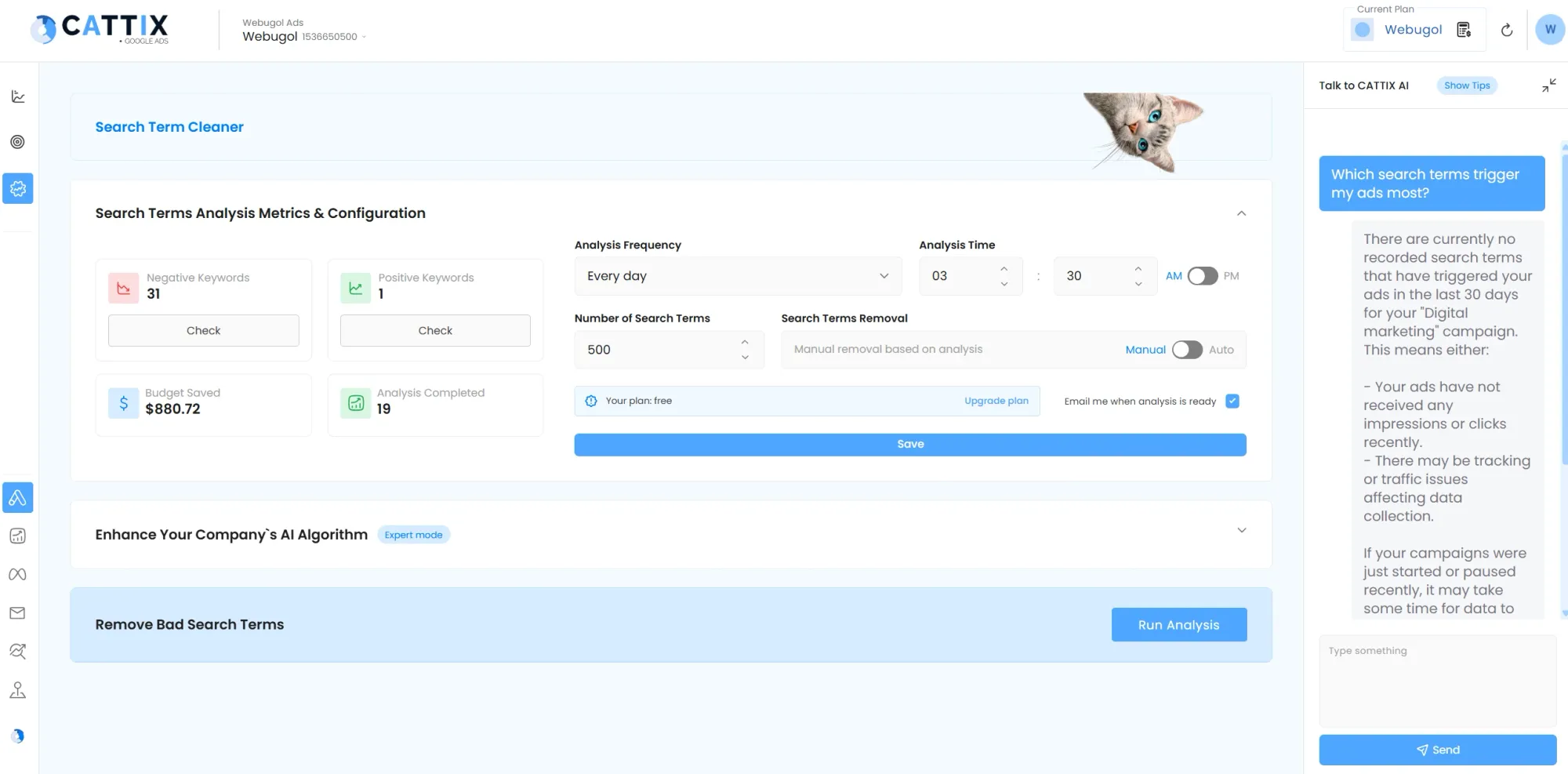
AI-powered management platforms. The newest generation of PPC budget management tools uses artificial intelligence to handle bidding, budget allocation, and campaign optimization automatically. These platforms can process more data and react faster than human managers or traditional automation.
Best Practices for Effective Bid Management
Follow these principles to improve your bidding results:
Start with clear goals. Define what success looks like before adjusting bids. Are you optimizing for leads, sales, brand awareness, or something else? Your goals determine your bidding strategy.
Segment your campaigns. Group keywords by intent, performance, and value. High-intent branded terms deserve different bids than broad awareness keywords.
Use bid adjustments strategically. Increase bids for devices, locations, or times that convert better. Decrease or exclude those that waste budget.
Monitor competitor activity. Auction insights show how often you compete with specific advertisers. Sudden changes in impression share often indicate competitor bid changes.
Test continuously. Run controlled experiments with different bid levels. Small tests reveal opportunities that gut feelings miss.
How AI Is Changing PPC Bid Management
Artificial intelligence is transforming how advertisers manage bids. Traditional automation follows rules you define. AI systems learn from your data and make predictions about future performance.
Modern AI bid management can analyze patterns across millions of auctions, predict conversion probability for individual users, adjust bids thousands of times per day, and continuously improve as more data flows in.
This matters because the Google Ads auction has become incredibly complex. Factors like audience signals, creative combinations, and cross-device behavior create billions of possible scenarios. No human can process this complexity in real time. AI can.
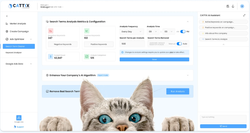
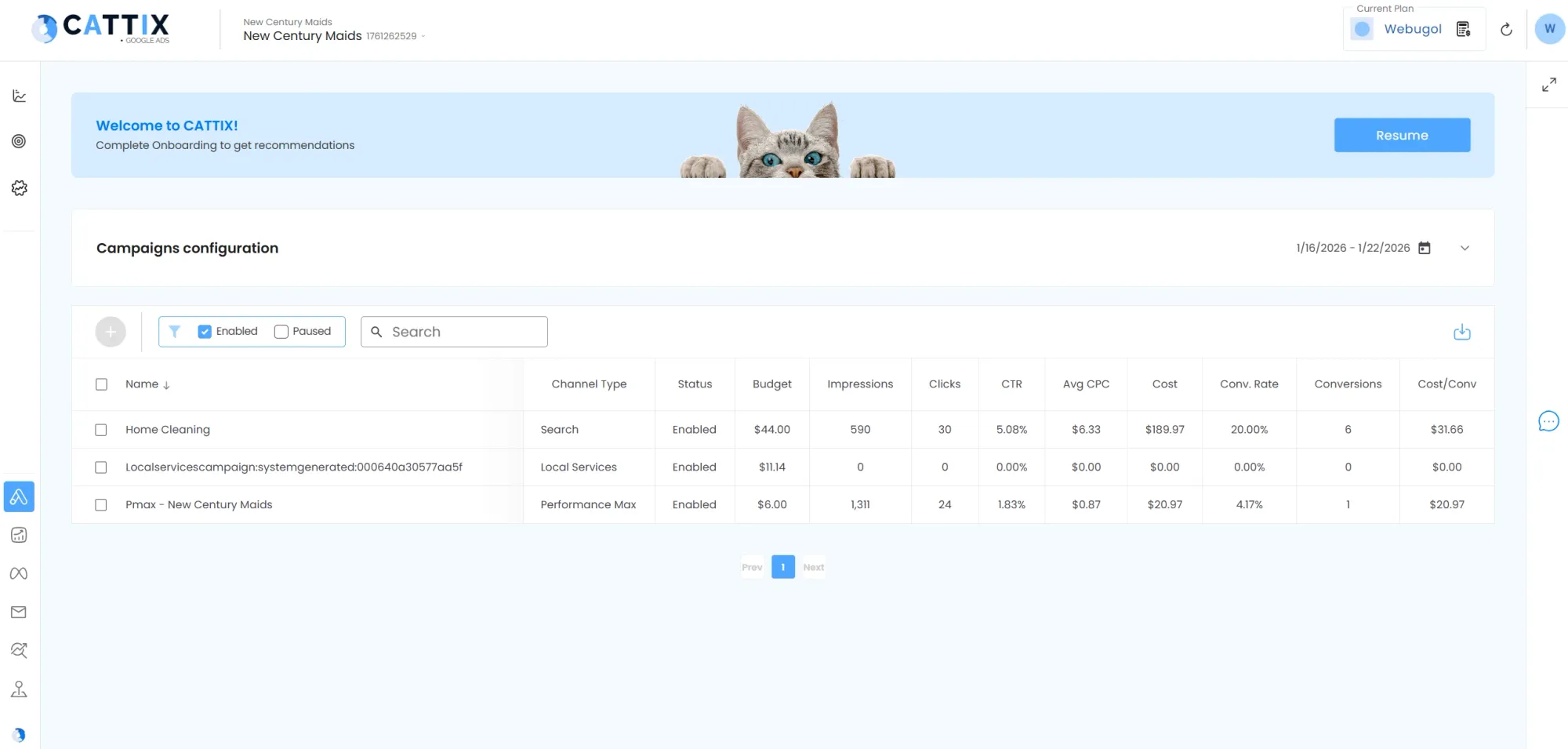
Platforms like CATTIX leverage AI specifically for Google Ads optimization, handling bid management alongside budget allocation and campaign structure decisions automatically.
Common Bid Management Mistakes to Avoid
Even experienced advertisers make these errors:
Bidding the same on all keywords. Not all keywords are equal. Branded terms, high-intent phrases, and proven converters deserve different treatment than broad discovery keywords.
Ignoring Quality Score. Focusing only on bids while ignoring landing page experience and ad relevance limits your results. Improving Quality Score often beats raising bids.
Over-reacting to short-term data. Daily fluctuations are normal. Making dramatic bid changes based on a few days of data introduces unnecessary volatility.
Setting and forgetting. Markets change constantly. Bids that worked last month may not work today. Regular review and adjustment keeps campaigns performing.
Neglecting the full funnel. Optimizing for clicks without considering conversion rates and customer value leads to profitable-looking campaigns that actually lose money.
Frequently Asked Questions
What is a good cost per click for Google Ads?
There is no universal "good" CPC. It depends entirely on your profit margins and conversion rates. A $50 CPC can be excellent if you sell high-value products, while a $2 CPC might be too expensive for low-margin items. Focus on your target CPA or ROAS rather than CPC alone.
How often should I adjust my bids?
For manual bidding, weekly reviews work well for most accounts. Automated bidding handles adjustments continuously, but you should still review performance and targets monthly. Avoid daily manual changes unless you spot clear problems.
Should I use automated bidding for new campaigns?
Automated bidding needs conversion data to work effectively. For new campaigns, consider starting with manual CPC or Maximize Clicks to gather data, then switch to conversion-based automation after accumulating 30-50 conversions.
What is the difference between CPC and CPM bidding?
CPC (cost per click) charges you only when someone clicks your ad. CPM (cost per thousand impressions) charges based on how many times your ad appears. Search campaigns typically use CPC, while display and video campaigns often use CPM for awareness goals.
How does Quality Score affect my bids?
Quality Score acts as a multiplier for your bids. Higher Quality Scores mean you can achieve better positions at lower costs. A keyword with a Quality Score of 8 might need only half the bid of a competitor with a Quality Score of 4 to win the same position.
Can AI really manage bids better than humans?
For most accounts, yes. AI processes more data, reacts faster, and never gets tired or emotional. Humans still excel at strategy, creative decisions, and handling unusual situations. The best approach combines AI execution with human oversight.
Start Optimizing Your PPC Bids Today
Effective bid management separates profitable campaigns from money pits. Whether you choose manual control, native automation, or AI-powered platforms, the principles remain the same: understand your goals, use data to guide decisions, and continuously test and improve.
The complexity of modern PPC makes AI assistance increasingly valuable. Tools like CATTIX handle the heavy lifting of bid optimization automatically, giving you more time to focus on strategy and growth.
Ready to improve your Google Ads performance? Start by auditing your current bids against actual conversion data. Identify keywords where you overpay for poor results and those where increased bids might capture more valuable traffic. Small improvements compound into significant gains over time.
About the Author
Eugene Ugolkov, CEO and Founder at CATTIX
Eugene is the founder of CATTIX, an AI-powered Google Ads management platform. With extensive experience in digital marketing and machine learning, he leads the development of intelligent advertising solutions that help businesses maximize their ROI.
Publications: Google Scholar