

Your Google Ads budget is a finite resource. Spend it poorly and you watch competitors capture your customers. Spend it wisely and you build a sustainable growth engine. PPC budget management is the discipline of allocating and controlling your advertising spend to maximize returns across campaigns, platforms, and time periods.
Most advertisers focus obsessively on bids and keywords while treating budget as an afterthought. This is backwards. Your budget decisions determine how much fuel your campaigns have to work with. Get budget management right, and everything else becomes easier.
What Is PPC Budget Management?
PPC budget management encompasses all decisions about how much to spend on paid advertising and where to allocate those funds. This includes setting overall spending limits, distributing budget across campaigns, controlling daily and monthly spend, and adjusting allocation based on performance.
Effective budget management means your best opportunities always have funding while poor performers get cut quickly. It means smoothing out spend across the month rather than burning through budget in the first week. It means having reserves for unexpected opportunities and knowing when to increase investment in what works.
Budget management connects directly to business outcomes. A well-managed $10,000 monthly budget often outperforms a poorly managed $20,000 budget. The discipline of budget control forces better decision-making throughout your campaigns.
Why Budget Management Matters More Than You Think
Consider what happens without proper budget management:
Uneven spend patterns. Campaigns exhaust daily budgets by noon, missing afternoon and evening conversions. Monthly budgets run out mid-month, creating gaps in market presence.
Misallocated resources. High-performing campaigns starve while low performers waste budget. Without active management, spend follows historical patterns rather than current opportunity.
Missed scaling opportunities. When something works, you need budget to capitalize quickly. Poor management leaves no flexibility to increase spend on winners.
Cash flow problems. Advertising spend without controls can spike unexpectedly, creating financial stress and forcing reactive cutbacks.
Good budget management solves these problems systematically. You maintain consistent market presence, fund winners aggressively, and keep spending aligned with business cash flow.
Setting Your PPC Budget
Determining the right budget starts with business fundamentals, not industry benchmarks.
Calculate your target customer acquisition cost. What can you afford to pay for a new customer? Factor in lifetime value, not just first purchase. A customer worth $1,000 over time justifies a much higher acquisition cost than one worth $50.
Work backwards from revenue goals. If you need $100,000 in monthly revenue from PPC and your average order is $200, you need 500 conversions. At a 2% conversion rate, that requires 25,000 clicks. Multiply by your expected CPC to find your budget requirement.
Start conservative and scale. New campaigns carry more risk. Begin with smaller budgets, prove performance, then increase investment. This approach protects against expensive learning periods.
Account for testing. Reserve 10-20% of budget for experimentation. Testing new keywords, audiences, and creative requires dedicated funding that should not compete with proven performers.
Budget Allocation Strategies
Once you set an overall budget, you must decide how to distribute it across campaigns and channels.
Performance-Based Allocation
Direct more budget to campaigns with better metrics. If Campaign A delivers leads at $30 while Campaign B costs $80 per lead, shift budget toward A. This seems obvious but requires discipline to execute consistently.
The challenge is balancing efficiency with scale. Your most efficient campaign might have limited volume potential. Sometimes you need to accept higher costs to capture more market share.
Funnel-Based Allocation
Allocate budget according to the customer journey. Awareness campaigns build your audience. Consideration campaigns nurture interest. Conversion campaigns capture demand. Each stage needs appropriate funding.
Many advertisers over-invest in bottom-funnel conversion campaigns while neglecting the awareness and consideration efforts that feed them. This works until you exhaust existing demand and growth stalls.
Competitive Allocation
Monitor competitor spending and adjust accordingly. In highly competitive markets, maintaining share of voice requires matching or exceeding competitor investment. In less competitive spaces, you can achieve dominance with moderate budgets.
Tools like Google Ads Auction Insights help you understand competitive dynamics. Sudden drops in impression share often signal competitor budget increases.
PPC Budget Management Tools and Software
Several tools help automate and optimize budget management:
Google Ads shared budgets. Pool budget across multiple campaigns to automatically shift spend toward better performers. Simple to implement but limited in sophistication.
Rules and scripts. Create automated rules to pause campaigns when budgets are exhausted, increase budgets on high-performing days, or alert you to unusual spending patterns.
Third-party platforms. Advanced PPC management tools offer sophisticated budget pacing, forecasting, and optimization features. These typically charge based on ad spend percentage.
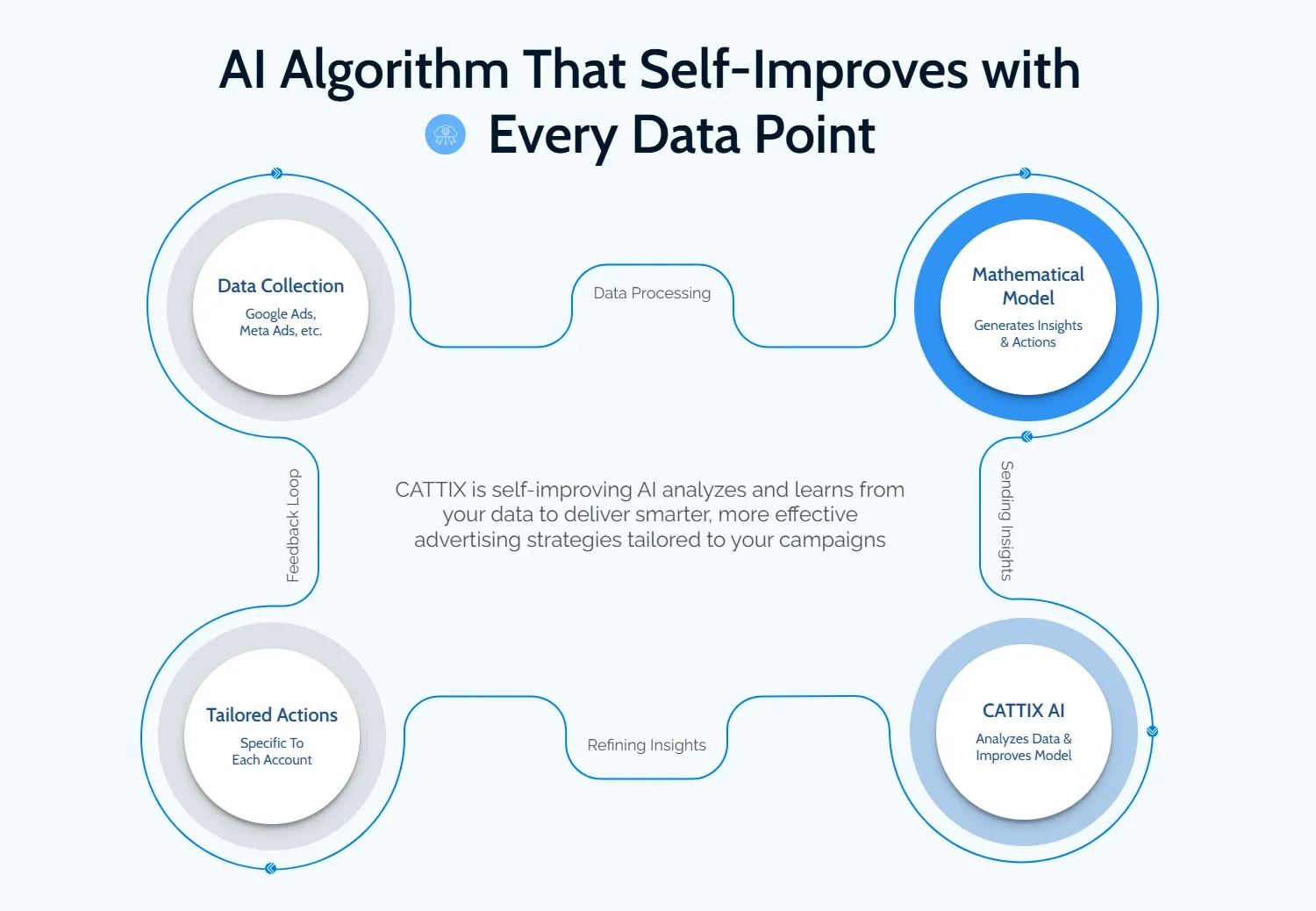
AI-powered management. Modern platforms like CATTIX use artificial intelligence to handle budget decisions automatically. These systems analyze patterns across your entire account to optimize allocation continuously.
The right tool depends on your account complexity and management capacity. Small accounts may need only native features. Large advertisers benefit from specialized PPC bid management and budget optimization platforms.
Daily and Monthly Budget Pacing
Budget pacing controls how quickly you spend your allocated funds.
Daily budgets in Google Ads control how much each campaign can spend per day. Google may exceed your daily budget by up to twice on high-opportunity days, balancing this by spending less on slower days. Over a month, you should not exceed your daily budget times 30.4.
Standard delivery spreads your budget throughout the day, ensuring ads show morning through evening. This works well for most advertisers.
Accelerated delivery spends budget as quickly as possible, prioritizing early impressions. This can exhaust budgets before peak conversion hours and is rarely recommended.
Monthly pacing ensures you do not run out of budget mid-month. Track spending against targets weekly. If you are ahead of pace, consider whether the extra spend generates proportional results or just depletes reserves.
Common Budget Management Mistakes
Avoid these frequent errors:
Setting and forgetting. Budgets need regular review. Market conditions, competition, and your own performance change constantly. Static budgets miss opportunities and allow waste.
Equal distribution. Splitting budget evenly across campaigns ignores performance differences. Let results guide allocation, not arbitrary fairness.
Ignoring seasonality. Most businesses have predictable demand fluctuations. Build these into your budget planning rather than reacting after the fact.
No testing budget. When every dollar must produce immediate returns, you cannot experiment. This guarantees stagnation. Protect dedicated testing funds.
Cutting winners during slow periods. When budgets tighten, instinct says cut the biggest line items. But your highest-spending campaigns are often your best performers. Cut waste first, not scale.
Advanced Budget Optimization Techniques
Sophisticated advertisers use these strategies:
Dayparting budgets. Adjust budget availability by time of day. If conversions peak between 6-9 PM, ensure adequate budget remains for those hours.
Portfolio bid strategies. Let Google optimize bids and budget allocation across grouped campaigns toward a shared target. This works well for campaigns with similar goals.
Incrementality testing. Measure the true impact of budget changes through controlled experiments. Increase budget in some regions while holding others constant to isolate the effect.
Rolling forecasts. Project future spending and results based on current trends. Adjust budgets proactively rather than reactively.
Frequently Asked Questions
How much should I spend on Google Ads?
There is no universal answer. Start by calculating your target customer acquisition cost and working backwards to determine sustainable spend levels. Most businesses begin with $1,000-5,000 monthly to gather meaningful data, then scale based on performance.
Why does Google Ads sometimes exceed my daily budget?
Google may spend up to twice your daily budget on days with high search volume, compensating by spending less on slower days. Over a billing period, you should not exceed your average daily budget times the number of days in the month.
Should I use shared budgets or individual campaign budgets?
Shared budgets work well for campaigns with similar goals and when you want automatic reallocation. Individual budgets offer more control and work better when campaigns have different objectives or performance levels.
How do I handle budget during seasonal peaks?
Plan ahead. Increase budgets before peak periods, not during them. Monitor impression share to ensure you capture available demand. Build budget reserves specifically for seasonal opportunities.
What percentage of revenue should go to PPC?
Industry averages range from 5-20% of revenue, but this varies enormously by business model, margins, and growth stage. Focus on return on ad spend rather than percentage of revenue. Profitable spend should scale; unprofitable spend should stop regardless of percentage.
How often should I review and adjust my budget?
Review spending against targets weekly. Make strategic budget adjustments monthly or when significant changes occur. Avoid daily tweaking unless you spot clear problems requiring immediate action.
Take Control of Your PPC Budget
Budget management is a discipline that separates professional advertisers from amateurs. By setting clear budgets, allocating strategically, pacing spend appropriately, and adjusting based on performance, you maximize the impact of every advertising dollar.
The complexity of modern PPC makes automated assistance increasingly valuable. AI-powered platforms like CATTIX handle budget optimization alongside bid management and campaign structure decisions, freeing you to focus on strategy.
Start improving your budget management today. Audit your current allocation against performance data. Identify campaigns that deserve more funding and those that waste resources. Small improvements in budget efficiency compound into significant profit gains over time.
About the Author
Eugene Ugolkov, CEO and Founder at CATTIX
Eugene is the founder of CATTIX, an AI-powered Google Ads management platform. With extensive experience in digital marketing and machine learning, he leads the development of intelligent advertising solutions that help businesses maximize their ROI.
Publications: Google Scholar