
Using AI for Google Ads: A Practical Guide to Better ROI
Running Google Ads campaigns manually takes hours of keyword research, bid adjustments, and constant monitoring. AI changes that equation entirely. Instead of spending your time on repetitive tasks, you can let intelligent algorithms handle the heavy lifting while you focus on strategy and growth.
This guide covers practical ways to start using AI for Google Ads, from Google's built-in features to third-party tools that automate entire campaign workflows.
What AI Can Do for Your Google Ads
AI brings several capabilities to Google Ads management that would be impossible to replicate manually at scale.
Keyword research becomes faster when AI analyzes search patterns, competitor data, and market trends to suggest relevant terms. Rather than guessing which keywords might work, AI tools can identify opportunities based on actual search volume and competition levels.
Bid optimization happens in real time. Machine learning algorithms adjust your bids based on user signals, device type, location, time of day, and hundreds of other factors. Smart Bidding strategies like Target CPA and Maximize Conversions use this approach.
Ad copy generation helps create multiple headline and description variations. AI can suggest text based on your landing page content, product information, and what performs well for similar advertisers.
Performance analysis spots patterns humans would miss. AI identifies which audience segments convert best, which placements waste budget, and where to shift spending for better results.
Ways to Use AI in Google Ads Today
You have two main paths for using AI in your Google Ads: Google's native features and third-party platforms.
Google's Built-in AI Features
Google has integrated AI throughout its advertising platform. Smart Bidding automates your bid strategy based on conversion goals. AI Max for Search expands your keyword targeting and customizes ad text automatically. Performance Max runs campaigns across all Google properties using machine learning to find conversions.
These tools work well for optimization, but they require you to build campaigns manually first. You still need to do keyword research, create ad groups, and write initial copy before AI can optimize.
Third-Party AI Tools
External platforms take AI further by automating campaign creation itself. PPC automation tools can handle everything from market research to publishing finished campaigns.
The advantage of third-party tools is workflow automation. Instead of using AI only for optimization after launch, you can use it from the very beginning of campaign development.
How CATTIX Uses AI for Google Ads
CATTIX is an AI-powered platform that automates the entire Google Ads campaign creation process. Here is how it works in practice.
AI-Powered Market Analysis
You start by entering your products or services, target locations, and language. The AI chat assistant guides you through configuration and asks clarifying questions to understand your business better.
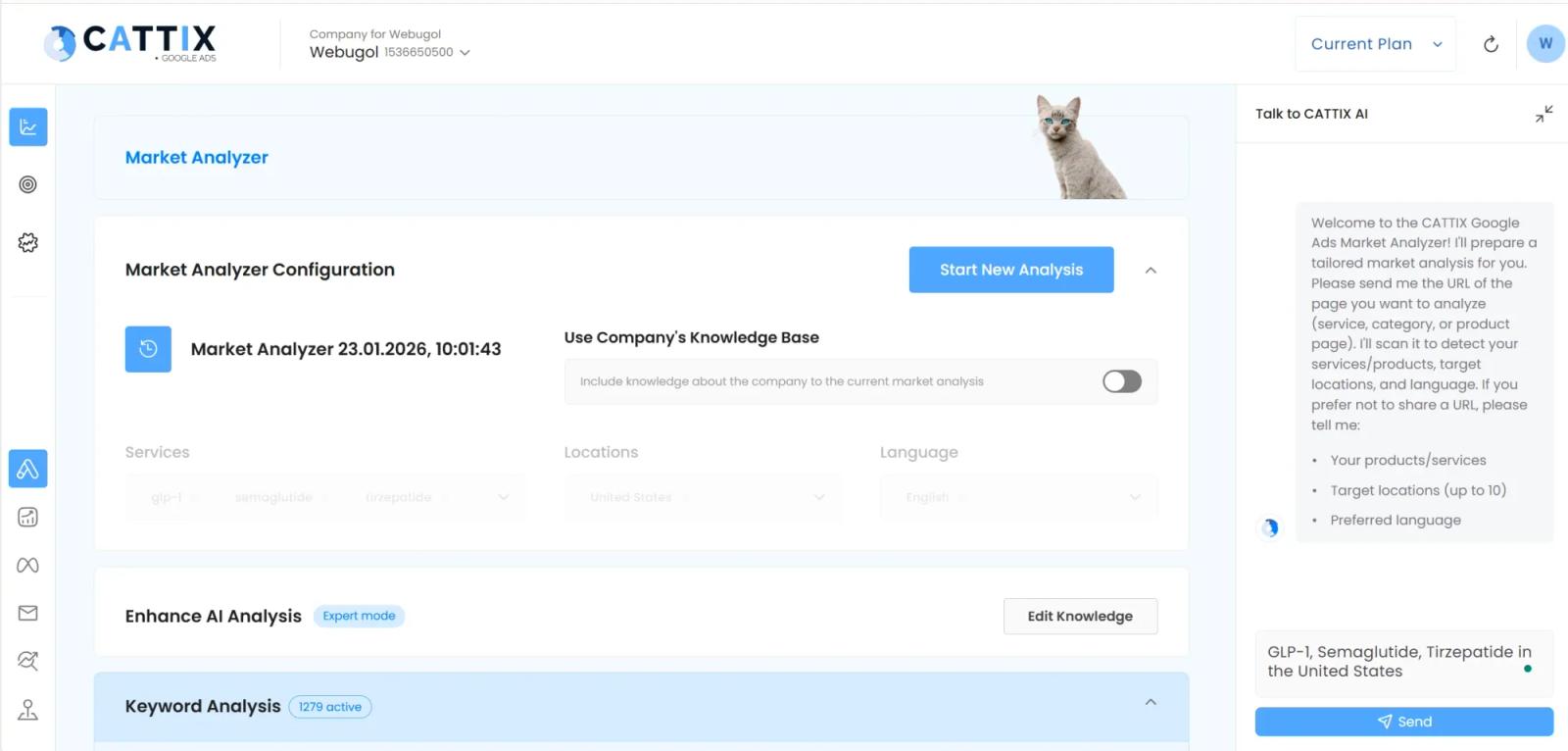
CATTIX analyzes your market automatically, identifying competitor patterns and opportunities you might miss with manual research. The system can use your company's knowledge base for more personalized results.
Automated Keyword Research
The platform collects relevant keywords automatically, often finding over 1,000 terms for a single market analysis. For each keyword, you see average monthly searches, top of page bid estimates (both low and high ranges), giving you clear data on demand and cost.
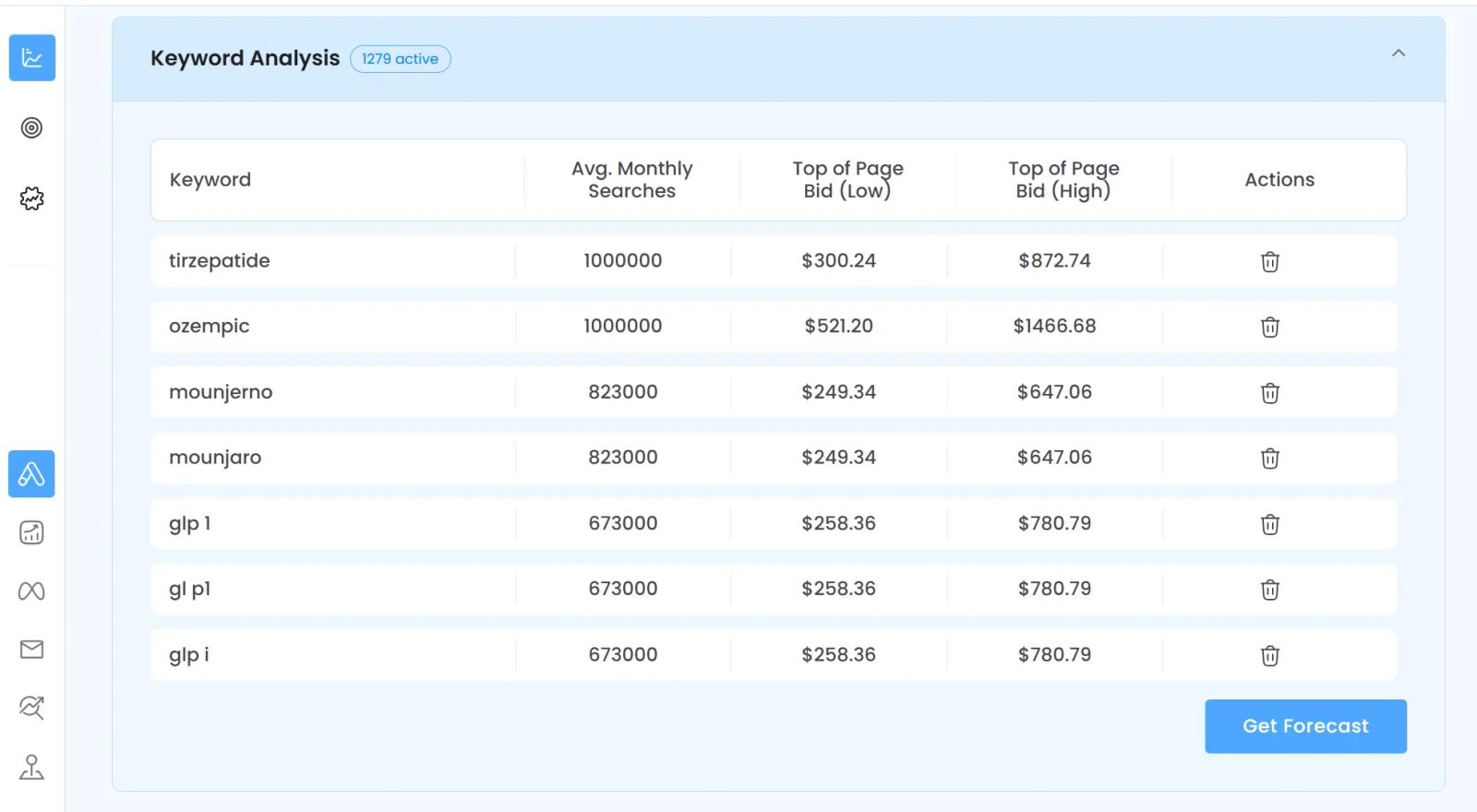
You can filter and remove irrelevant terms with one click. The "Get Forecast" feature shows projected clicks and costs before you spend anything, so you understand potential ROI upfront.
Smart Campaign Building
Once keywords are selected, CATTIX builds your campaign structure intelligently. You configure settings like bidding strategy, conversion goals, daily budget, match types, and targeting. The AI then creates ad groups, writes responsive ads, and adds extensions.
Before publishing, you see a complete summary: ad groups created, total keywords, responsive ads generated, sitelinks and callouts, estimated monthly clicks, and projected cost. One click publishes directly to your Google Ads account.
This approach to AI Google Ads management takes what would normally require hours of manual work and completes it in minutes.
Best Practices for AI-Powered Google Ads
Getting good results from AI requires the right approach.
Start with quality data. AI learns from your conversion tracking. If your tracking is incomplete or inaccurate, the algorithms will optimize toward the wrong goals. Set up Enhanced Conversions and verify your data is clean before relying heavily on automation.
Set clear conversion goals. Tell AI exactly what you want to optimize for, whether that is purchases, leads, phone calls, or another action. Vague goals produce vague results.
Monitor and refine regularly. AI handles execution, but you should review performance weekly. Check search terms for irrelevant queries, review placement reports, and ensure the automation aligns with your business objectives.
Combine AI with human strategy. Use AI for tasks it does well (data analysis, bid adjustments, testing variations) while keeping humans responsible for messaging, brand positioning, and business decisions.
Test before scaling. Start AI features on a portion of your account before rolling out everywhere. This lets you evaluate performance and catch any issues early.
Start Using AI for Your Google Ads
AI transforms Google Ads from a time-intensive manual process into a scalable, data-driven operation. Whether you use Google's native features or a comprehensive platform like CATTIX, the technology is accessible now.
For campaign optimization on existing ads, enable Smart Bidding and experiment with AI Max features. For building new campaigns from scratch, try CATTIX and experience how AI handles market analysis, keyword research, and campaign creation automatically.
The advertisers seeing the best results in 2026 combine AI efficiency with human strategy. Start with one approach, measure the results, and expand from there.
About the Author
Eugene Ugolkov, CEO and Founder at CATTIX
Eugene is the founder of CATTIX, an AI-powered Google Ads management platform. With extensive experience in digital marketing and machine learning, he leads the development of intelligent advertising solutions that help businesses maximize their ROI.
Publications: Google Scholar