

Finding the right keywords for Google Ads campaigns used to mean hours of manual research, spreadsheet juggling, and educated guessing. AI keyword management changes that. These tools automate the entire keyword discovery process, giving you more keywords, better data, and faster results than traditional methods ever could.
What Is AI Keyword Management?
AI keyword management refers to using artificial intelligence to automate keyword research, organization, and optimization for advertising campaigns. Instead of manually brainstorming terms or sifting through keyword planners one query at a time, AI-powered tools analyze your business, identify relevant search terms, and deliver organized keyword lists complete with performance metrics.
The core capabilities include:
- Automated keyword discovery that finds terms humans often miss
- Real-time search volume data showing actual monthly demand
- CPC estimates (both low and high bids) for budget planning
- Intelligent filtering to remove irrelevant terms quickly
- Campaign forecasting before you spend a dollar
This approach transforms keyword research from a time-consuming chore into a data-driven process that takes minutes instead of hours.
Why Manual Keyword Research Falls Short
Traditional keyword research has fundamental limitations that even experienced marketers struggle to overcome.
Time consumption is the first problem. Building a comprehensive keyword list manually requires checking multiple sources, analyzing competitors, and organizing everything into usable groups. This process can take days for a single campaign.
Limited discovery is another issue. Human researchers tend to think in familiar patterns. They find obvious keywords but miss the long-tail variations, related terms, and niche phrases that often deliver the best results. A recent study found that most advertisers target less than 20% of the relevant keywords in their market.
Scaling becomes impossible. Managing keywords across multiple campaigns, ad groups, and accounts multiplies the workload exponentially. What works for one campaign breaks down when you need to manage ten.
This is why so many marketers now rely on ppc automation tools to handle the heavy lifting. Automation solves the scale problem while improving discovery.
How AI Transforms Keyword Management
AI-powered keyword management tools work differently than traditional planners. They combine machine learning with advertising data to automate the entire research workflow.
Comprehensive keyword collection is the foundation. Rather than starting with seed keywords and expanding manually, AI tools analyze your products, services, and target market to generate extensive keyword lists automatically. CATTIX's Market Analyzer, for example, can collect 1,000+ relevant keywords from a single market analysis.
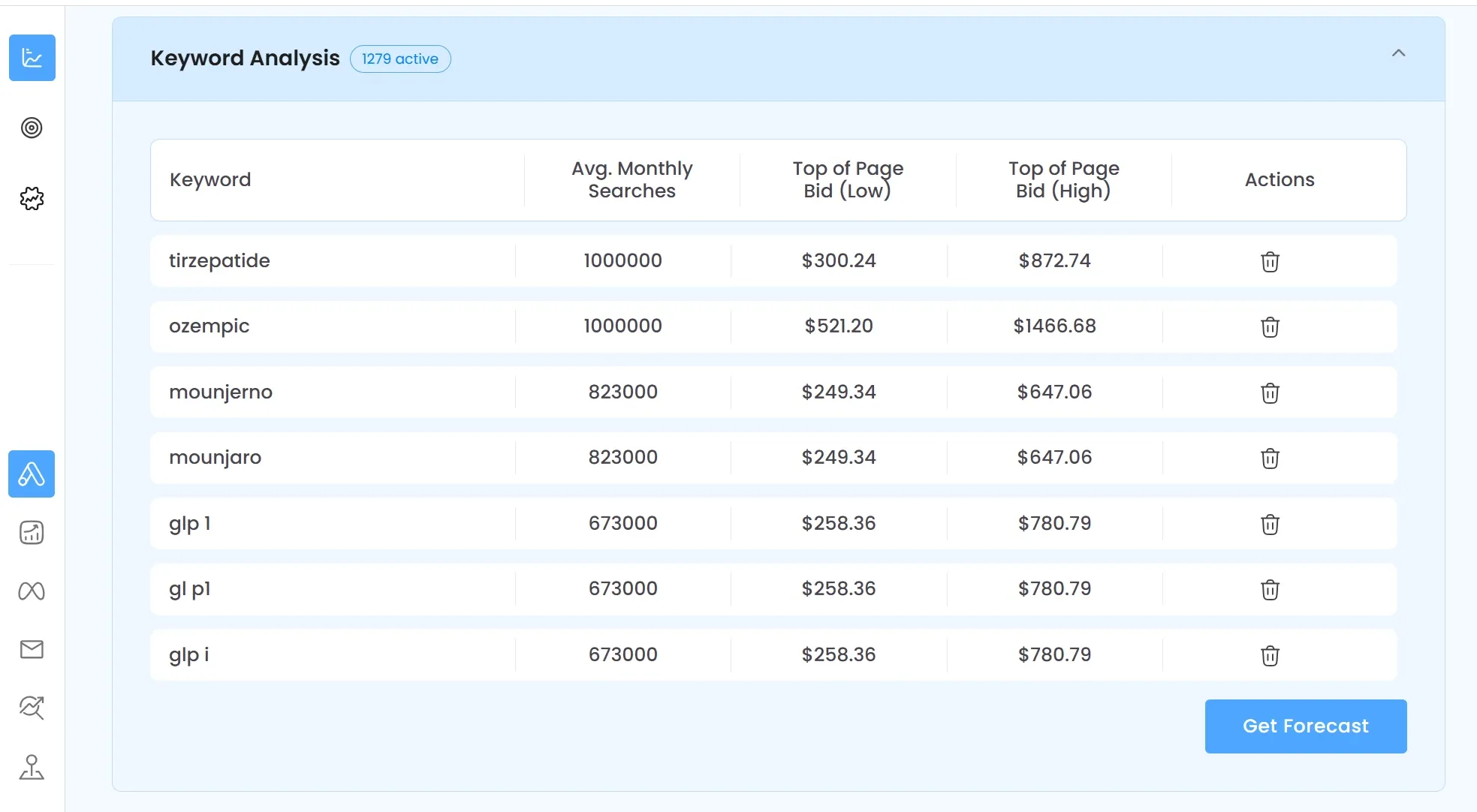
Data enrichment happens automatically. Each keyword comes with essential metrics: average monthly searches, top-of-page bid estimates (both competitive and minimum), and trend indicators. This data helps you prioritize keywords based on demand and cost, not guesswork.
Intelligent filtering speeds up refinement. AI tools learn which keywords are irrelevant to your business and suggest removals. One-click filtering eliminates junk keywords that would waste budget if they slipped into your campaigns.
Forecasting connects keywords to results. Before launching any campaign, you can see estimated clicks, impressions, and costs based on your keyword selections. This ai google ads management approach prevents budget surprises and enables realistic goal-setting.
Key Features to Look for in AI Keyword Tools
Not all AI keyword tools deliver equal value. When evaluating options, prioritize these capabilities:
Scale of discovery matters. The tool should find hundreds or thousands of keywords, not just dozens. More keywords mean more opportunities to reach customers searching in different ways.
Metric completeness is essential. You need search volume AND cost data for every keyword. Tools that only show volume leave you guessing about competition and required budget.
Filtering and organization should be fast. Adding or removing keywords should take seconds, not minutes. The best tools let you refine lists with one click.
Campaign integration saves additional time. Look for tools that connect keyword research directly to campaign building. Going from keywords to live ads should be a smooth workflow, not a manual copy-paste exercise.
Cost forecasting provides planning clarity. Knowing estimated spend before launching prevents budget overruns and helps you set realistic expectations with clients or stakeholders.
Getting Started with AI Keyword Management
Implementing AI keyword management follows a straightforward workflow. Here's how the process typically works:
Step 1: Define your market. Enter your products, services, target locations, and language preferences. The more specific you are about your offering, the more relevant your keywords will be.
Step 2: Let AI collect keywords. The system analyzes your inputs against search data and generates a comprehensive keyword list. This happens automatically and typically takes just a few minutes.
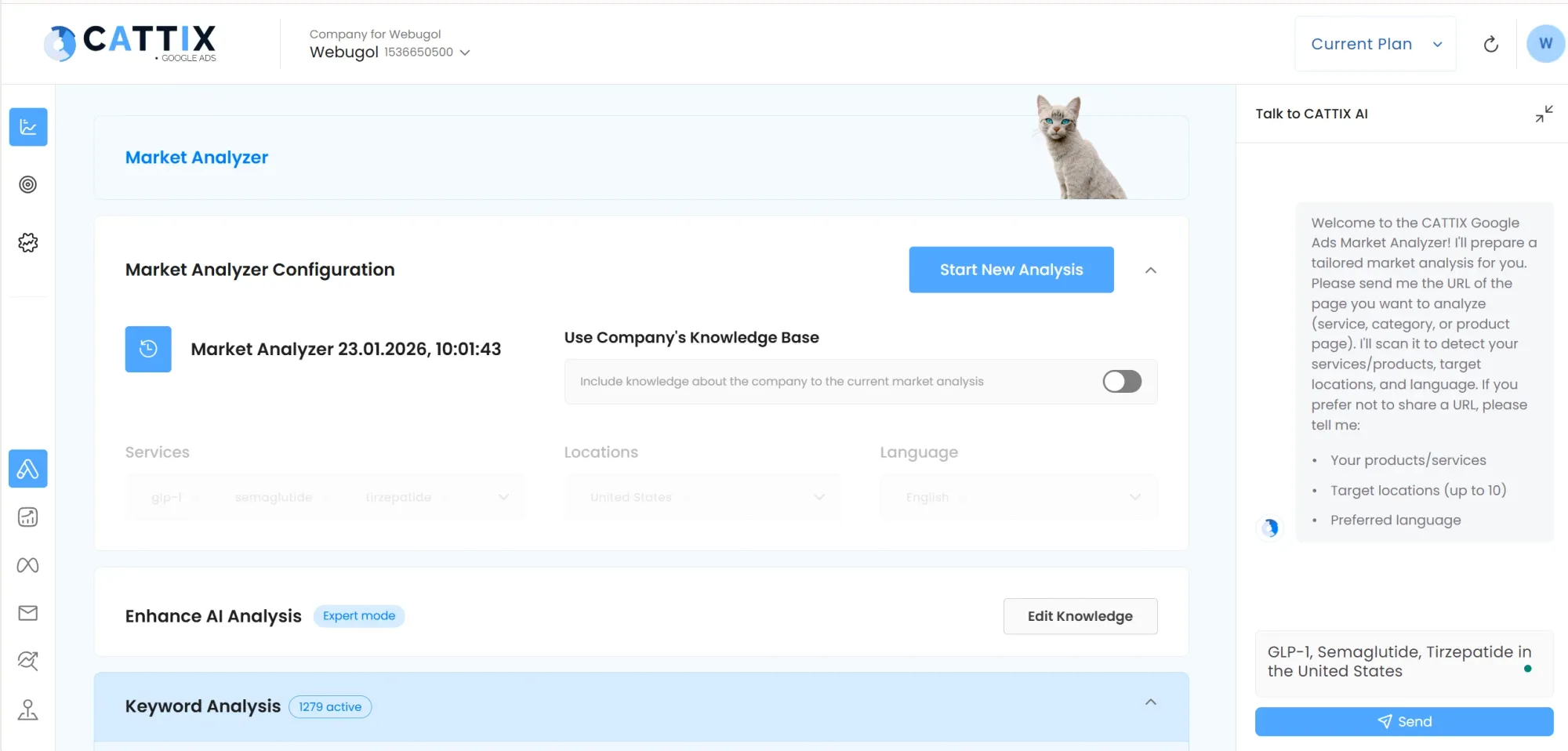
Step 3: Review and filter results. Scan the keyword list and remove terms that don't fit your campaigns. AI suggestions help identify potentially problematic keywords, but you make the final decisions.
Step 4: Analyze the forecast. Before moving forward, review projected clicks, impressions, and costs. Adjust your keyword selection if the forecast doesn't match your budget or goals.
Step 5: Build your campaigns. With refined keywords and clear projections, move to campaign creation. Tools like CATTIX's ppc campaign builder let you go directly from keyword selection to campaign setup without leaving the platform.
This workflow replaces hours of manual research with a guided, data-driven process that produces better results in less time.
Frequently Asked Questions
What is AI keyword management?
AI keyword management uses artificial intelligence to automate keyword discovery, analysis, and organization for advertising campaigns. Instead of manually researching terms, AI tools analyze your business and market to generate comprehensive keyword lists with performance data automatically.
How does AI improve keyword research for Google Ads?
AI improves keyword research by analyzing vastly more data than humans can process manually. It identifies relevant terms across entire markets, provides real-time volume and cost metrics, and suggests keywords that manual research typically misses. The result is larger, more complete keyword lists in less time.
Can AI find keywords I might miss manually?
Yes. AI tools regularly discover keywords that humans overlook. They identify long-tail variations, related terms, and niche phrases by analyzing search patterns rather than relying on human intuition. Studies show manual research typically captures less than 20% of available relevant keywords.
What features should I look for in an AI keyword tool?
Prioritize tools that offer large-scale keyword discovery (hundreds or thousands of terms), complete metrics (volume and CPC data), fast filtering capabilities, campaign integration, and cost forecasting. The best tools combine all these features in a single workflow.
How many keywords should a Google Ads campaign have?
Campaign size varies by market and goals, but most successful Search campaigns include 50-200 keywords across multiple ad groups. AI tools help you identify the right number by showing which keywords have sufficient volume to justify inclusion.
Is AI keyword management better than manual research?
For most advertisers, yes. AI delivers more keywords, more data, and faster results than manual methods. The primary advantage is scale: AI can analyze entire markets in minutes, while manual research is limited by human time and attention.
How long does AI keyword research take?
Most AI keyword tools complete initial analysis in 2-5 minutes. Reviewing and filtering results might add another 10-15 minutes depending on list size. Compare this to manual research, which often requires multiple hours or even days.
Can AI help with negative keywords too?
Yes. Many AI tools identify potentially irrelevant or wasteful terms during keyword collection. Some platforms also monitor search term reports after campaigns launch and suggest negative keywords based on actual query performance.
Start Managing Keywords Smarter
AI keyword management removes the tedious, time-consuming parts of campaign research while improving results. Automated discovery finds more opportunities. Data enrichment enables better decisions. Forecasting prevents budget mistakes.
CATTIX brings these capabilities together in a complete platform. From market analysis to keyword collection to campaign creation, you get an end-to-end workflow powered by AI. Try it free and see how many keywords you've been missing.
About the Author
Eugene Ugolkov, CEO and Founder at CATTIX
Eugene is the founder of CATTIX, an AI-powered Google Ads management platform. With extensive experience in digital marketing and machine learning, he leads the development of intelligent advertising solutions that help businesses maximize their ROI.
Publications: Google Scholar